
What Are the Most Common Golf Swing Injuries Chiropractic Care Addresses?
The golf swing generates significant rotational force through the lower back and hips in a repetitive, one-sided motion, which commonly leads to low back pain, hip tightness, and shoulder strain. Restoring rotational mobility often improves both comfort and swing mechanics.
The golf swing asks the spine to generate a lot of rotational force through a repetitive, one-sided motion, which is exactly the kind of movement pattern that tends to create wear in predictable places. Fox Cities golfers feel this most by mid-season.
Why the Golf Swing Is Hard on the Spine
A full golf swing generates significant rotational force through the lower back and hips in a fraction of a second, repeated dozens of times over a single round. Because the swing is always performed the same direction, the strain accumulates one-sidedly rather than being balanced across the body the way a more symmetrical activity would distribute it. Add an imperfect swing mechanic or inadequate warm-up, and that one-sided rotational force finds the path of least resistance, often a joint or muscle group that’s already slightly restricted.
A round of golf involves dozens of swings, and a season involves dozens of rounds, which is a lot of repetition through the same one-sided pattern. Weekend golfers who skip a proper warm-up often notice this most, since cold, unprepared tissue absorbs rotational force less forgivingly than warmed-up muscle.
Common Trouble Spots for Golfers
Low back pain is the most common golf-related complaint, followed closely by hip tightness and shoulder strain from the follow-through. Many golfers also develop a subtle rotational restriction on one side of the spine that limits how far they can turn on their backswing without compensating elsewhere. Addressing restrictions like these isn’t just about reducing pain; restoring proper rotation often improves swing mechanics as a side effect of resolving the underlying restriction.
A golfer who’s compensating for a restriction often doesn’t realize it, since the body naturally finds a workaround that still gets the ball down the fairway. That workaround usually isn’t free, though, and it tends to show up eventually as strain somewhere else in the swing.
Getting Ahead of Swing-Related Strain
If recurring soreness after rounds or a noticeable limit on your backswing rotation has become routine, Genesis Chiropractic provides individualized Gonstead chiropractic care in Appleton and can help identify what’s contributing to it.
Frequently Asked Questions
Can chiropractic care improve my golf swing?
It can support the mobility and rotation your swing depends on, though it’s not a substitute for swing coaching. The two address different parts of the same problem.
When should a golfer see a chiropractor?
Persistent soreness after rounds, or a noticeable restriction in how far you can rotate on your backswing, are both reasonable signs it’s worth getting evaluated.
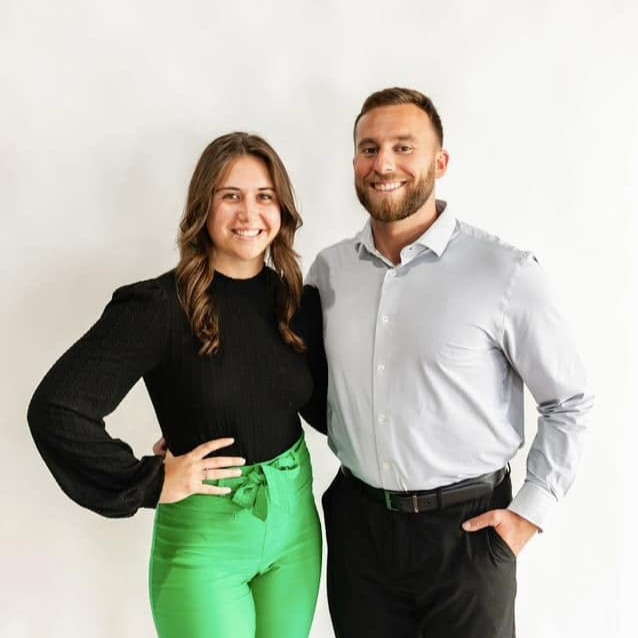
Dr. Alex and Dr. Maycee Sturino are the chiropractors at Genesis Chiropractic, a Gonstead-specific clinic in Appleton, Wisconsin serving patients throughout the Fox Cities. They use full-spine X-rays and hands-on analysis to pinpoint the exact source of a patient’s pain before making a precise, individualized adjustment. Dr. Alex is a U.S. Army veteran who served as a medic in the 82nd Airborne, and Dr. Maycee is Webster Certified through the ICPA for prenatal chiropractic care — together bringing a specific, patient-centered approach to every exam.